Wednesday, February 8, 2017

Oil Market 'Responding Positively' To Production Cut: OPEC


Doha: Qatar's energy minister, the current president of the Organization of the Petroleum Exporting Countries (OPEC ), said world oil markets were "responding positively" to output cuts implemented by OPEC and some non-OPEC producers.

"I think the market is responding positively and you can see the drop in supply," Mohammed Saleh al-Sada told reporters.

OPEC and non-OPEC producers led by Russia agreed in December to cut output by nearly 1.8 million barrels per day, initially for six months, starting from the beginning of this year.

Tuesday, February 7, 2017

Hindalco Surges On Strong Show From Novelis In December Quarter

hindalco-650_650x400_81470990215
Hindalco shares surged over 3 per cent to an intraday high of Rs. 192.25 on Wednesday after its US subsidiary Novelis reported strong earnings for the October to December quarter. Novelis contributes more than half of Hindalco's operating profit. Atlanta-based Novelis said its adjusted net profit for the December quarter more than doubled to $67 million dollar compared to $32 million in the year ago quarter.

Novelis' strong performance was supported by a 7 per cent jump in its adjusted EBITDA or operating income to a record high of $255 million and 18 per cent reduction in interest expenses as a result of refinancing of two senior note issuances during the second quarter of fiscal 2017, the company said in a press release.

"Following our successful bond refinancing during the second quarter, we refinanced our $1.8 billion term loan with Asian banks in January," said Devinder Ahuja, senior vice president and chief financial officer at Novelis.

"Together, these bond and term loan transactions will result in an extended debt maturity profile and annual cash interest savings of approximately $80 million," he added.
Meanwhile, investors are also optimistic about Hindalco's December quarter earnings, to be announced on February 13 (Monday) on the back of strong show from Novelis and a revival of international metal prices.

As of 10.25 am, Hindalco shares traded 1.32 per cent higher at Rs. 188.35, compared to 0.03 per cent gain in the broader Nifty.

Earning Over Rs. 50 Lakh? How Marginal Relief Brings Down Your Tax Burden

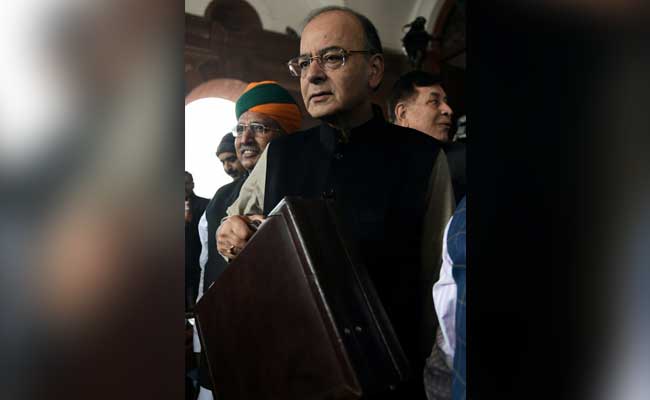
Finance Minister Arun Jaitley in Budget 2017 cut the income tax rate on the lowest slab (Rs. 2.5 lakh to Rs. 5 lakh) to 5 per cent from 10 per cent. To offset the revenue loss, he imposed a surcharge of 10 per cent on those with taxable income between Rs. 50 lakh and Rs. 1 crore, thus bringing more taxpayers into the purview of surcharge. And the 15 per cent surcharge on income above Rs. 1 crore will continue as before. The total amount of tax foregone on account of these changes in tax rates is estimated at Rs. 15,500 crore. The new income tax rates will be applicable from April 1, 2017 or assessment year 2018-19 (AY2018-19).
What is Surcharge?

Surcharge is applicable on income tax if the income exceeds a specified limit. It is applicable on the basic tax (without inclusion of cess). Let us consider a person below 60 with taxable income of Rs. 75 lakh. What will he pay after the surcharge proposed in the Budget? His basic tax would come to Rs. 20.62 lakh. The 10 per cent surcharge comes to Rs. 2.06 lakh. Thus his total tax liability would be Rs. 22.68 lakh and after education cess it comes to about Rs. 23.37 lakh.

The concept of marginal relief is designed to provide some relief in levy of surcharge to a taxpayer where the total taxable income marginally exceeds Rs. 50 lakh or Rs. 1 crore.
How marginal relief helps lower tax burden?

Let us consider two scenarios:
1) where the surcharge is 10 per cent (income between Rs. 50 lakh and Rs. 1 crore) and 2) where surcharge is 15 per cent (income above Rs. 1 crore). According to tax rules, the surcharge of 10 per cent is not applicable where marginal relief comes into play even if taxable income is above Rs. 50 lakh. According to the concept of marginal relief, if the amount payable as surcharge exceeds the income above Rs. 50 lakh or Rs. 1 crore, the surcharge will be applicable at a marginal rate, which is 70 per cent of the incremental income above Rs. 50 lakh or Rs. 1 crore. (Incremental income above Rs. 50 lakh or Rs. 1 crore - 30 per cent of incremental income).

Scenario - 1 (where income exceeds Rs. 50 lakh marginally)
Suppose an individual's taxable income amounts to Rs. 51 lakh. Technically, the person has to pay a 10 per cent surcharge as income exceeds Rs. 50 lakh. But in this case, marginal relief comes into play and the surcharge he has to pay is not 10 per cent. How?

The person's income above Rs. 50 lakh is Rs. 1 lakh (Rs. 51 lakh - Rs. 50 lakh). On Rs. 51 lakh, the person is supposed to pay tax of Rs. 13.42 lakh and surcharge of (@10%) Rs. 1.34 lakh for (AY 2018-19). Since the surcharge (Rs. 1.34 lakh) is more than the income differential between (Rs. 51 lakh and Rs. 50 lakh), the surcharge of 10 per cent will not be applicable. Thus, the person with taxable income of Rs. 51 lakh will pay tax of Rs. 13.42 lakh and surcharge of Rs. 70,000 which comes to Rs. 14.12 lakh. Including cess (3%), it will come to Rs. 14.54 lakh. If the marginal relief had not been applicable, the total tax liability would have been Rs. 15.20 lakh.

Scenario - 2 (where income exceeds Rs. 1 crore marginally)
Suppose an individual's taxable income amounts to Rs. 1.02 crore. Technically, the person has to pay a 15 per cent surcharge as income exceeds Rs. 1 crore. But in this case, marginal relief comes into play and the surcharge of 15 per cent is not applicable. How?

The person's income above Rs. 1 crore is Rs. 2 lakh (Rs. 1.02 crore - Rs. 1 crore). On Rs. 1.02 crore, the person is supposed to pay tax of Rs. 28.72 lakh and surcharge of (@15%) of Rs. 4.31 lakh for (AY 2018-19). Since the surcharge (Rs. 4.31 lakh) is more than the incremental income of Rs. 2 lakh (Rs. 1.02 crore - Rs. 1 crore), then the 15 per cent surcharge will not be applicable. Instead, a lower surcharge of Rs. 1.4 lakh (70 per cent of incremental income of Rs. 2 lakh) will be applicable as marginal relief comes into play.
Thus the tax liability of the person with taxable income of Rs. 1.02 crore comes to Rs. 30.12 lakh (Rs. 28.72 lakh  Rs. 1.4 lakh). Including cess, it would come to Rs. 31.02 lakh crore. Had marginal tax not come into play the total tax liability would have been Rs. 33.03 lakh and with cess Rs. 34.02 lakh.

Wednesday, February 1, 2017

Budget 2017: Lower Tax Rates To Encourage Income Disclosures

arun-jaitley-afp_650x400_51485941134
India will change some personal tax rates to encourage people to disclose their incomes as well as put more cash in the hands of consumers after Prime Minister Narendra Modi withdrew old high-denomination banknotes in a crackdown on unaccounted wealth.

The personal tax rate will be halved to 5 percent on incomes between 250,001 rupees ($3,697) and 500,000 rupees, Finance Minister Arun Jaitley said Wednesday in New Delhi, while announcing the budget for the year starting April 1. A surcharge of 10 percent will be levied on the personal tax paid on incomes between 5 million rupees and 10 million rupees, he said.

"While the government is trying to bring within tax-net more people who are evading taxes, the present burden of taxation is mainly on honest tax payers and salaried employees who are showing their income correctly," said Jaitley. "Also an argument is made if a nominal rate of taxation is kept for the lowest slab many more people will prefer to come within the tax net."

The step is part of efforts of the government to widen the tax net in a country of more than 1.2 billion people where about 53.8 million filed details of their personal incomes. The move will also likely put more disposable cash in the hands of people as growth in Asia's third-biggest economy slows.

Gross domestic product is predicted to expand 6.8 percent in the year through March, from 7.9 percent a year earlier, according to the median forecast of analysts surveyed by Bloomberg.

Indians with annual income up to 250,000 rupees for the current fiscal year are exempt from paying any personal tax. A 10 percent tax is levied on income from 250,001 rupees to 500,000 rupees; 20 percent for 500,001 rupees to 1 million rupees; and 30 percent for more than 1 million rupees. In addition, a 3 percent education levy is also charged on personal incomes. Individuals with an annual income exceeding 10 million rupees have to pay a surcharge of 15 percent on the personal tax paid.